

TL;DR
Most B2B events produce one piece of video content: a recap reel… if that.
It gets posted on LinkedIn, maybe emailed to attendees, then quietly disappears.
But one well-planned event can produce months of content across marketing, sales enablement, and customer marketing. Keynotes become clips. Customer conversations become testimonials. Expert interviews become thought leadership series.
The difference is strategy.
Instead of treating events as documentation, strong teams treat them as content capture moments inside a larger video marketing system.
This guide walks through a practical framework for B2B event video production that turns a single conference into a sustained content engine.
B2B event video production is the process of capturing conferences, trade shows, and hosted events in a way that creates reusable content for marketing, sales, and customer expansion.
This approach works for B2B brands hosting events, sponsoring conferences, or attending industry trade shows. If your team wants event footage to support pipeline, not just promotion, this is for you.
Why does most B2B event video production fail?
Marketing riddle: What do you get when you pour endless time, effort, and endless networking into an event? You guessed it! Nine times out of ten, a leftover lanyard, 26 new LinkedIn connections, and a few dim-lit selfies. If you’re lucky, a few LinkedIn posts.
You already know the pattern.
A company spends six months planning a conference. Speakers are booked. Sponsors are lined up. Travel budgets get approved.
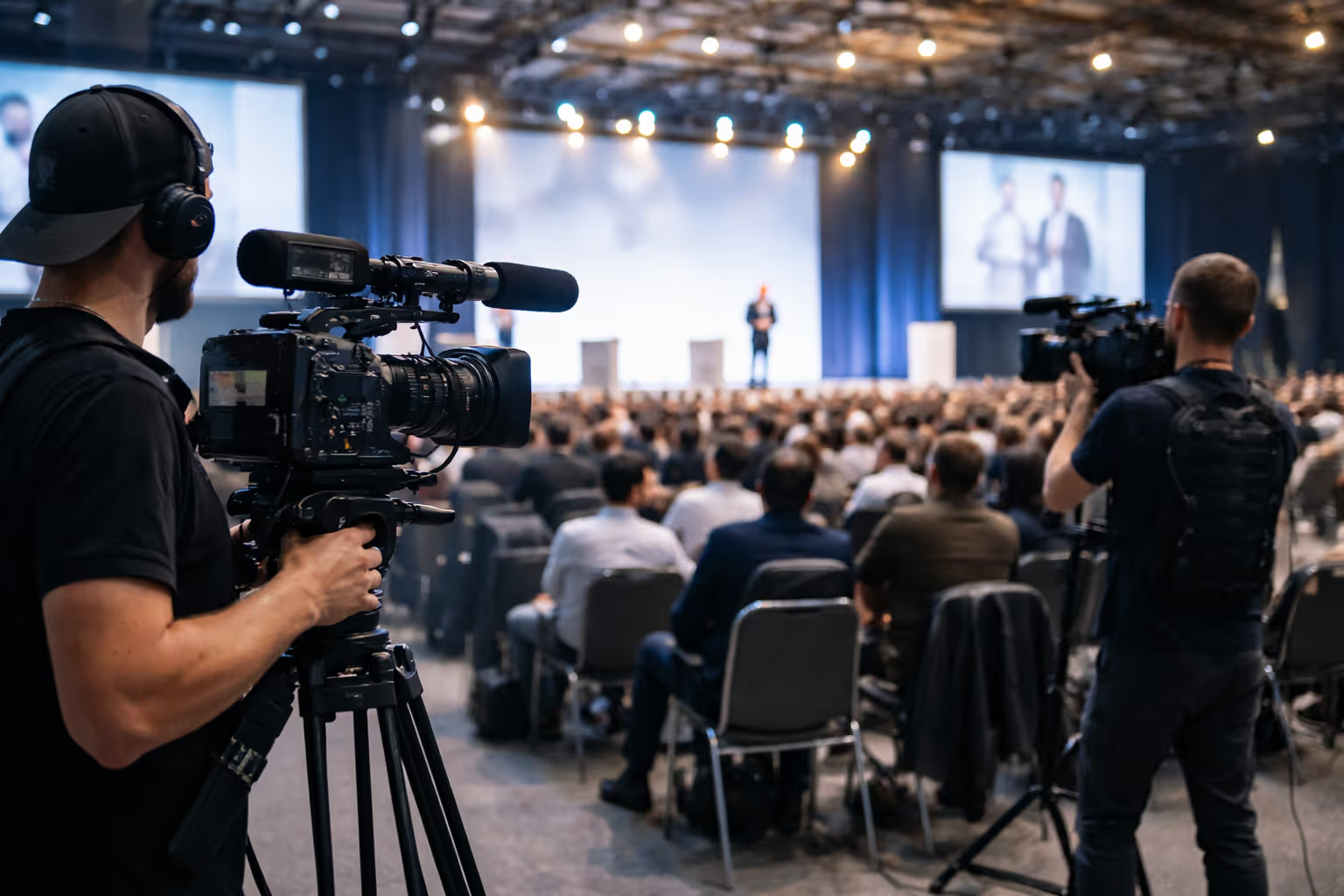
And if video team shows up, cameras roll.
Two weeks later, the marketing team receives:
- A 90-second highlight reel
- Full keynote recordings
- A handful of photos
Then the event is over. Content production stops.
This is where most B2B event video production fails. The event is treated like something to document, not something to capture strategically.
The result is predictable. All that energy, budget, and expertise condensed into one recap video and a folder of session recordings nobody revisits.
The missed opportunity is enormous. So many rich conversations (and many missed potential connections), bright ideas flying here and there, and finally, a place where the industry’s brightest minds all gather in a room.
When an event is captured properly, it becomes a content accelerator.
For a few days, your company is surrounded by:
- Customers
- Partners
- industry operators
- subject matter experts
- executives and founders
All in the same place. Talk about magic.
That combination almost never happens in normal marketing operations. Coordinating even a handful of these people for interviews during the year can take months.
At an event, they’re already there.
Which means one event can realistically produce three to six months of video content if the capture plan is designed with that outcome in mind.
A wonderful bonus: This doesn’t just go for the people running or hosting the event, we’ve captured months of content for event attendees, too!
The Event Content Framework
When we approach B2B event video production, we don’t start with cameras or shot lists.
We start with one question:
What content should this event generate over the next six months?
That framing shifts the entire strategy.
Instead of capturing an event recap, you build a content framework around four core types of footage.
1. Event Storytelling Assets
This is what most companies think of first.
- keynote recordings
- breakout sessions
- panel discussions
- event highlight videos
These videos do serve a real purpose.
They help sell future events to sponsors and speakers. They demonstrate authority. They show the scale and energy of your community.
But they shouldn’t be the only output.
When structured properly, keynote sessions alone can produce dozens of smaller pieces of content. A single talk often contains multiple clip-worthy insights that can be distributed across social channels for weeks.
The key is capturing these sessions with repurposing in mind. Clean audio, multiple camera angles, and a clear shot list make the footage usable long after the event ends.
2. Expert Conversations and Thought Leadership
This is where the real leverage begins.
Events gather tons of brilliant experts in one place. Instead of letting those conversations happen only in hallways, you can capture them intentionally.
Many brands now build small interview sets or content booths during conferences. A simple two-chair setup with professional audio is often enough. But these booths can definitely be spruced up to whatever level you’re aiming for. Check out the set-up we created for Cohera at PCMA this year.
These short interviews can cover topics like:
- emerging industry trends
- operational lessons from operators
- strategy discussions between peers
- tactical advice for specific roles
Looking for more topics ideas? Check these out.
At Sweet Fish, this is one of the most valuable formats we capture at events. A two-day conference can easily produce 10 to 20 expert interviews. Most of these become one longer-form video and many short-form clips edited to maximize organic reach.
And while this content is fabulous for promoting the event itself, the real key here is this: This event content lives far beyond the event, highlighting high-value conversations while also platforming your thought leadership and brand.
In some cases, companies even set up temporary podcast booths to record conversations throughout the event. (Want to dive deeper into the strategy? Book a free strategy call.)
The goal isn’t random interviews. The goal is structured discussions with people whose perspectives your audience (and buyers) actually want to hear.
3. Customer and Partner Stories
Customer video content is notoriously difficult to capture during normal marketing cycles.
Schedules conflict. Travel budgets get in the way. Coordinating production across multiple locations becomes expensive.
Events help solve that problem.
Your customers are already in the building. Many of them are excited to share their experience, especially when they’re surrounded by peers.
That makes conferences the perfect moment to record:
- testimonial clips
- customer success stories
- partnership conversations
- product experience feedback
We’ve seen companies walk away from a two-day event with 10 or more usable customer testimonials.
Those clips become incredibly valuable assets for:
- sales enablement
- product pages
- case studies
- outbound messaging
Instead of chasing testimonials for months, you capture them in a single concentrated window.
4. Brand and Relationship Footage
This last category is often overlooked.
Events generate an enormous amount of authentic brand footage.
Your leadership team speaking on stage. Conversations with customers. Product demonstrations. Real interactions between people.
That footage becomes the visual foundation for future content.
Instead of relying on generic stock video, your marketing team now has a library of real moments that represent your company.
These clips show up later in:
- website videos
- recruiting content
- thought leadership pieces
- social media posts
Over time, this visual library helps your brand feel more human and more credible.
Designing Your Event Video Strategy Before the Event
If you want more than a recap video, the strategy has to start early.
Trying to add a capture plan two days before the conference rarely works. Instead, start with three simple planning steps.
Step 1: Start With Content Objectives
Before the agenda is finalized, define the content outcomes. In an ideal world, what content would you love to get out of your event capture? Be sure to keep an open mind… we can go beyond sizzles and buzz here.
For example:
- 12 expert interviews
- 8 customer testimonial clips
- 50 short thought leadership clips
- one highlight film
- full keynote recordings
This creates a clear production target.
Instead of hoping good footage happens organically, the capture team knows exactly what needs to be recorded. We can reverse engineer your capture plan from here.
Step 2: Map Content to Revenue Motions
Event content should support your broader marketing and revenue strategy.
For example:
Keynotes often serve top-of-funnel awareness.
Expert interviews support thought leadership and demand generation.
Customer stories strengthen sales conversations and case studies.
When video capture aligns with these goals, the event stops being a branding exercise and becomes part of the revenue engine.
This philosophy reflects a broader shift happening in B2B marketing. Video works best when it functions as infrastructure across the buyer journey, not as isolated campaigns.
Step 3: Build a Cross-Team Shot List
The best shot lists come from multiple teams.
Marketing might request thought leadership clips. Sales might want customer proof points. Customer success might want adoption stories.
When these requests are combined before the event, the capture plan becomes far more useful across the organization.
A simple shared document listing target speakers, customers, and themes can dramatically improve the value of the footage captured.
How to B2B Video Event Production, the short version:
- Define business goals
- Choose content formats
- Build the shot list
- Schedule speakers/customers
- Plan post-production and distribution
Common B2B Event Video Production Mistakes
Most event video fails because of planning, not production quality.
A few mistakes show up again and again:
- Waiting until the week of the event to plan capture
By then, speaker schedules are locked and customers are busy. The best interviews are coordinated weeks ahead. - Recording only the keynotes
Stage content matters, but some of the most valuable footage comes from smaller expert conversations happening offstage. - Not scheduling customer conversations in advance
Testimonials rarely happen spontaneously. Without dedicated interview slots, they usually don’t happen at all. - Capturing footage without a distribution plan
If no one knows how the content will be used after the event, it often sits in folders instead of becoming clips, sales assets, and thought leadership. - Measuring success only by views
The real signals usually show up in sales conversations, account engagement, and pipeline influence.
None of these mistakes are unusual. They’re just expensive.
Three Event Video Setups That Work
There are many ways to capture content at an event. But three setups consistently produce the best results and are a great jumping-off point.
Main Stage and Session Capture
If you are hosting the event, capturing the main stage is essential.
This includes:
- keynote talks
- breakout sessions
- panel discussions
- audience reactions and event energy
With the right production setup, these sessions can later be broken into multiple clips for social media and website distribution.
We’ve worked with companies like Deloitte and Upstart to use conference sessions this way, turning stage discussions into ongoing thought leadership content rather than one-time recordings.
Interview Booth or Content Studio
Sponsors and exhibitors love this one. Create a small studio space inside your booth.
The setup is simple:
- two cameras
- professional microphones
- basic lighting
- branded backdrop
From there, companies schedule short conversations throughout the event. Or pull in passerbys to break down topics and share ideas.
Clients like Cohera have used this approach to record interviews with industry leaders during conferences, creating a library of insights that can fuel social content and YouTube uploads for months.
Mobile “Man on the Floor” Capture
Some of the best moments happen away from stages and booths.
A small mobile team can capture quick interviews with attendees throughout the event.
These clips are typically short, focused questions such as:
- What’s the biggest change happening in your industry this year?
- What’s one thing vendors get wrong about your role?
- What’s one strategy that actually worked for your team?
These quick responses often perform extremely well on LinkedIn because they feel authentic and unscripted. The opportunities for tagging and reach are also infinite.
How do you turn one event into months of content?
Capturing footage is only half the equation. The real value comes from turning that footage into a structured content pipeline.
Long-Form Assets
Start with your longer pieces of content.
These might include:
- full keynote recordings
- extended interviews
- panel discussions
These videos often live on platforms like YouTube or within your website resource center. They serve as deeper educational content for audiences who want more context. Just know that without an existing audience or paid media support, these videos likely won’t gather a ton of performance. They serve more as evergreen content.
Long-form video also performs well in search environments, especially when supported by transcripts and structured written content.
Short-Form Clips
Short clips are usually where the majority of distribution happens.
From each long-form video you might create:
- 5 to 10 social clips
- quote snippets
- micro-insights
These clips are ideal for platforms like:
- YouTube Shorts
- Instagram Reels
- TikTok, when relevant
One event can easily generate dozens of short-form videos, which means your marketing team suddenly has a steady stream of content rather than scrambling to create new assets each week.
Note from the pros: Don’t force this content to work. Shorts should be intentional and serve a purpose if you want them to perform.
Sales and ABM Content
Some of the most valuable clips never appear on social media. Customer testimonials and expert insights are extremely effective inside the sales process.
Sales teams can use these clips in:
- follow-up emails
- proposal presentations
- outbound outreach
- account-based marketing campaigns
When prospects hear directly from customers or respected operators in the industry, credibility increases dramatically.
Where should B2B event video content be distributed?
Distribution is where event content often falls apart. Hate to break it to you, but uploading everything to YouTube and hoping people discover it will not work.
Instead, think of distribution across several layers.
Website and Resource Centers
Your website is the most controlled environment for long-form content.
Embedding video across relevant pages helps prospects understand your expertise quickly and keeps them engaged longer.
Video combined with written content also improves discoverability in search engines and AI-driven search tools, which rely on contextual signals to understand video content.
LinkedIn and Social Channels
LinkedIn is usually one of the most effective distribution channel for B2B event clips because it’s usually the most concentrated user base of attendees, sponsors, and company leaders.
Short insights from speakers, customers, and operators can spark strong conversations and reactions (even shares!) when shared by individuals rather than only company pages.
Encouraging speakers and guests to share their clips can expand your reach significantly and let you reach connections far beyond your current connections.
YouTube Shorts and other vertical video platforms can also extend distribution beyond existing followers.
Email and Customer Marketing
Event content is also useful inside email.
Clips can be included in:
- newsletters
- nurture campaigns
- follow-ups with event attendees
- customer education sequences
Instead of writing new content from scratch, marketers can reuse insights captured during the event.
Measuring Event Video Against Business Outcomes
Event video performance shouldn’t be measured only in views. Instead, look at two categories of metrics.
Category 1: Production Metrics
First, measure the operational success of the capture strategy.
For example:
- number of interviews recorded
- number of clips produced
- time required to publish content
If the event was expected to produce 80 clips but only generated 10, the issue likely lies in execution rather than strategy. These are all learning opportunities for future capture sessions.
Business Impact
Over time, evaluate how the content contributes to broader marketing goals.
Signals to watch include:
- engagement from target accounts
- increased sales conversations referencing the content
- improved response rates in outbound messages using clips
- pipeline influenced by event content
Attribution will never be perfect, but consistent patterns reveal whether the content is contributing to demand.
Building Event Video Into a Repeatable System
Once this approach is implemented, event video production stops being a one-off project. It becomes part of a repeatable system.
Each event follows a similar process:
- content objectives defined early
- capture plan aligned with marketing goals
- interviews and testimonials scheduled in advance
- post-production organized into a structured distribution calendar
At that point, events become one of the most efficient ways to generate meaningful video content.
Instead of producing a single recap, you walk away with a library of insights, conversations, and stories that fuel marketing for months.
And when done well, it positions your company not just as a participant in the industry, but as a voice shaping the conversation.
If your team wants help building that kind of event video strategy, book a call with Sweet Fish. We help B2B brands capture, produce, and distribute event video in ways that support real marketing and revenue goals.
FAQs
What is B2B event video production?
B2B event video production is the process of capturing conferences, trade shows, and industry events in a way that creates reusable marketing content. This can include keynote recordings, interviews, customer testimonials, highlight videos, and short social clips.
Why should B2B companies invest in event video production?
Events gather customers, partners, and industry experts in one place. Strategic video capture allows companies to turn those moments into months of marketing content, sales enablement assets, and thought leadership material.
What types of videos should be captured at B2B events?
Common formats include keynote recordings, panel discussions, expert interviews, customer testimonials, event highlight videos, and short “man on the street” style clips with attendees.
How much content can one event realistically produce?
A two-day conference can often generate dozens of usable assets. Many companies leave events with 10–20 interviews, several customer testimonials, and 50 or more short clips that can be distributed over several months.
Should B2B companies record podcast interviews at events?
Yes, when planned correctly. Many brands set up small podcast or interview booths during conferences to capture conversations with industry leaders and customers. These recordings often become long-form episodes and multiple short clips.
Where should event video content be distributed?
Common distribution channels include LinkedIn, YouTube, company websites, email newsletters, and sales outreach. Different formats work better on different platforms.
Can event video content support sales teams?
Absolutely. Customer testimonials and expert insights captured at events can be used in sales conversations, outbound messaging, and account-based marketing campaigns.
How do you measure ROI from event video production?
ROI can be measured through content engagement, influence on pipeline, sales usage of clips, and qualitative feedback from prospects who discovered the company through video content.
Should companies hire a professional team for event video production?
Professional production teams help ensure high-quality audio, consistent visuals, and a clear capture strategy. They also make it easier to turn raw footage into a large library of usable marketing assets.
How far in advance should event video production be planned?
Ideally at least 6 weeks before the event. Planning ahead allows teams to schedule interviews, prepare shot lists, and align video capture with broader marketing goals.