


TL;DR
A video podcast gives your brand more than a show. It gives you a repeatable content engine.
For B2B companies, the real value of a video podcast is not just audience growth or downloads. It is the ability to consistently turn your company’s expertise, customer conversations, and market perspective into content buyers can actually see, hear, trust, and remember.
A strong video podcast can help your brand:
- Build trust with buyers before they are ready to talk to sales
- Turn internal subject matter experts into recognizable voices
- Create long-form content that fuels short-form video, blogs, newsletters, email, and social
- Improve discoverability across YouTube, Google, AI-powered search, and social platforms
- Support demand generation with a steady stream of useful, repurposable content
The brands that win with video podcasts do not treat them like isolated shows. They treat them like the foundation of a broader video marketing system.
What Is a Video Podcast?
A video podcast is a podcast that is recorded and distributed with video, not just audio.
Like a traditional podcast, it usually includes a host, a guest or co-host, recurring topics, and a consistent publishing cadence. But instead of only giving audiences something to listen to, a video podcast gives them something to watch.
That matters because modern buyers consume content across formats. Some people still listen to podcasts while driving, walking, or working. Others prefer to watch clips on LinkedIn, YouTube, or embedded on a company’s website. A video podcast gives your brand both options.
The full episode can live on YouTube, your website, and podcast platforms. The conversation can be cut into short-form clips. The transcript can become blog content. The best insights can become newsletters, social posts, sales enablement content, or internal thought leadership.
In other words, a video podcast is not just a show. It is a repeatable source of strategic content.
That distinction is important.
A podcast created only for “brand awareness” can become vague very quickly. A video podcast built as part of a content marketing system has a clear job. It captures the ideas your buyers care about, packages those ideas in multiple formats, and distributes them across the channels where your audience already spends time.
Why Video Podcasting Matters for B2B Brands
Most B2B marketing still has a sameness problem.
The same gated reports. The same generic LinkedIn posts. The same “thought leadership” that feels like it could have been written by anyone in the category.
That is a problem because buyers are not just comparing features anymore. They are comparing trust, expertise, point of view, and confidence.
A video podcast helps your brand show those things instead of just claiming them.
When buyers watch a real conversation with your founder, subject matter experts, customers, partners, or industry peers, they get a clearer sense of how your company thinks. They hear your perspective in context. They see the people behind the brand. They start to understand what you believe, what you know, and whether your approach matches the kind of company they want to work with.
That kind of trust is hard to build through static content alone.
A blog post can explain an idea. A case study can document a result. A landing page can describe an offer. But a video podcast lets your audience experience your thinking in a more human way.
For B2B companies with complex products, long buying cycles, or expertise-driven services, that is especially valuable.
Your buyers may not be ready to book a call today. But they may be willing to watch a conversation, hear your take on a relevant trend, or send a useful clip to someone on their team. Over time, those interactions create familiarity.
And familiarity matters when the buying window finally opens.
A Video Podcast Builds Trust Before Buyers Are In-Market
Only a small percentage of your market is actively ready to buy at any given moment. The rest are learning, comparing, lurking, researching, or simply becoming aware that they have a problem worth solving.
That is where a video podcast becomes powerful.
Instead of waiting until buyers are in-market and then trying to win their attention with ads, your brand can start building trust earlier. A consistent show gives people a low-pressure way to engage with your company before they ever fill out a form or talk to sales.
This is especially useful in B2B because buying decisions are rarely instant. Buyers need time to understand the problem, explore options, align internally, and build confidence. During that process, your content can either help them move forward or disappear into the noise.
A strong video podcast gives your brand a reason to show up consistently with useful perspective.
Not just product updates. Not just promotional posts. Real conversations about the problems, tradeoffs, trends, and decisions your buyers are already thinking about.
That helps your brand become associated with the category itself.
When someone repeatedly sees your team discussing the topics they care about, your brand starts to feel familiar before the sales process begins. That does not guarantee a deal. But it does make your company easier to remember, easier to trust, and easier to include in the conversation when timing becomes real.

The Three Core Benefits of a Video Podcast
1. It Makes Your Brand More Human
B2B brands often struggle to sound human because they hide behind polished messaging.
Everything is edited. Everything is approved. Everything is carefully worded until it barely sounds like a person said it.
Video podcasts create space for something different.
They allow your audience to see real conversations, real reactions, and real expertise. Viewers can hear tone, see facial expressions, and understand the personalities behind your company. That makes your brand feel more accessible and credible.
This does not mean the show should be sloppy or unstructured. Production quality still matters. But the goal is not to create an over-polished commercial. The goal is to create a conversation worth watching.
That human layer is especially important now. As AI-generated content becomes more common, buyers are going to place more value on visible expertise. They want to know who is behind the idea. They want to see whether the person talking actually understands the problem.
A video podcast gives your experts a stage.
Your founder, executives, customer-facing leaders, technical specialists, and strategists all have knowledge that may never make it into a traditional marketing campaign. A show gives you a repeatable way to capture that knowledge and turn it into content your audience can use.
2. It Creates a Repeatable Content Engine
One of the biggest advantages of a video podcast is how much content it can create from a single recording.
A single episode can become:
- A full YouTube video
- An audio podcast episode
- Short-form clips for LinkedIn, YouTube Shorts, and other social platforms
- Blog content based on the transcript
- Newsletter sections or email campaigns
- Quote graphics
- Sales enablement snippets
- Internal training content
- Paid social creative
- Website embeds for relevant pages
This is why video podcasts work so well as the foundation of a content engine.
Most B2B teams do not struggle because they lack ideas. They struggle because every content format starts from scratch. Someone has to write the blog. Someone has to create the social posts. Someone has to source the POV. Someone has to get the expert’s attention. Someone has to turn scattered thoughts into something usable.
A video podcast solves part of that problem by creating a consistent source of raw material.
Instead of asking your subject matter experts to write polished content, you can invite them into a structured conversation. From there, your marketing team can extract the strongest ideas and repurpose them across the channels that matter most.
This is not just efficient. It also makes your content stronger.
The best insights often come out through conversation. Follow-up questions, examples, stories, and moments of clarity are easier to capture when people are talking naturally. Those moments can become the basis for sharper, more useful content across your entire marketing program.
3. It Helps Your Brand Get Discovered
Video podcasts can also improve discoverability.
Search is no longer limited to traditional blog content. Buyers use Google, YouTube, LinkedIn, AI-powered search tools, podcast apps, and social platforms to research companies and ideas. If your brand only publishes written content on your website, you may be missing major discovery opportunities.
A video podcast expands where your expertise can show up.
On YouTube, your episodes and clips can be discovered through search, recommendations, and related videos. On Google, embedded videos and supporting blog content can strengthen topic relevance. On LinkedIn, short clips can introduce your perspective to people who may never visit your website directly. In AI-powered search, clear, structured, helpful content can make it easier for systems to understand what your brand is known for.
The key is to treat the show as part of your search and content strategy, not just a media project.
That means each episode should have a clear topic, strong title, useful description, transcript, and supporting content. Your website should organize episodes in a way that helps humans and search engines understand the themes you cover. Your clips should be tied back to larger ideas, not just random moments.
Done well, a video podcast helps build a searchable library of expertise.
Over time, your brand becomes easier to find for the topics, questions, and problems you want to be associated with.
Why Video Podcasts Work So Well for B2B
Video podcasts are especially effective in B2B because they match the way complex buying decisions actually happen.
B2B buyers need education, trust, proof, and internal alignment. They are not just buying a product. They are making a decision that may affect their team, budget, systems, reputation, and future results.
That means content has to do more than generate awareness. It has to help buyers think.
A good video podcast can support that process in several ways.
It can explain complex ideas in a more accessible format. It can show how your team approaches problems. It can feature customers and partners who add credibility. It can surface objections, tradeoffs, and strategic questions that buyers may already be wrestling with. It can create clips that sales teams use to reinforce conversations.
This is the difference between content that simply gets published and content that participates in the buying journey.
For example, a cybersecurity company could use a video podcast to unpack emerging threats, interview CISOs, and explain how security leaders are thinking about risk. A healthcare technology company could use one to discuss operational challenges with health system leaders. A B2B SaaS company could use a show to explore category trends, customer workflows, and implementation lessons.
In each case, the show is not just entertainment. It is a trust-building asset.
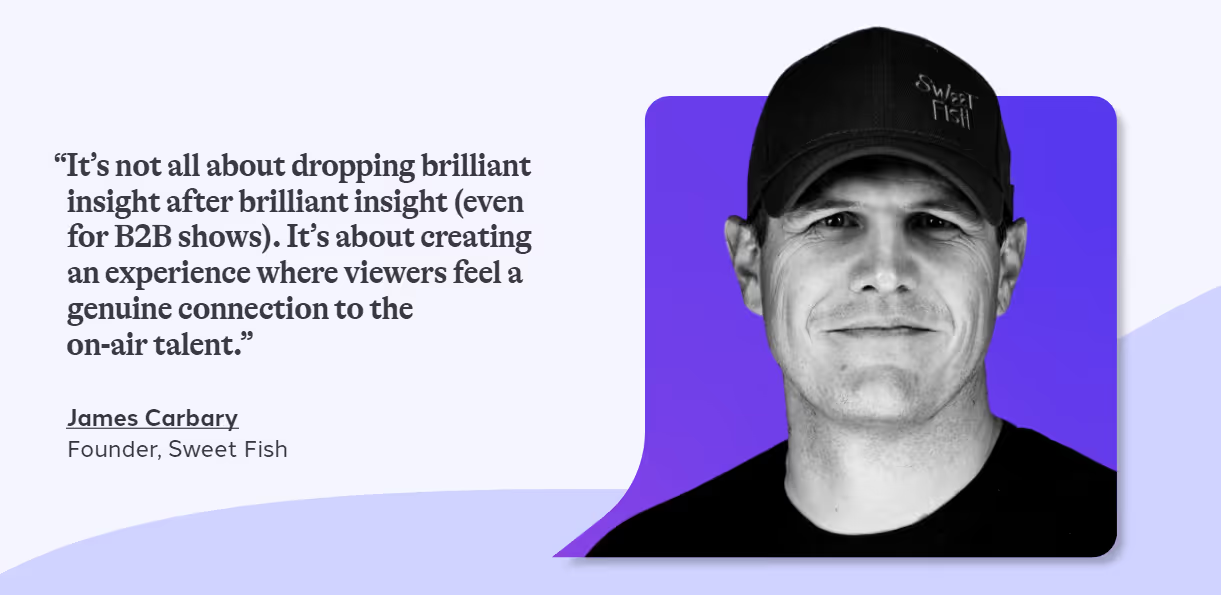
The Role of Storytelling in a Video Podcast
The best video podcasts are not just information dumps.
They have a point of view. They have structure. They use stories, examples, and real conversations to make ideas memorable.
That matters because buyers remember stories better than claims.
Your brand can say, “We help companies improve efficiency,” and almost no one will care. Or you can host a conversation where a customer explains the messy process they were stuck in, the decision they had to make, what changed after implementation, and what they would do differently next time.
That story creates context.
It gives buyers something to relate to. It helps them picture their own situation. It makes the problem feel real and the solution easier to understand.
This is where video podcasting has an advantage over many traditional B2B formats. It creates room for nuance. Instead of forcing every idea into a 600-word blog post or a 30-second ad, you can let the conversation breathe.
That does not mean every episode should be long for the sake of being long. It means the format gives your brand enough space to explore topics with the depth they deserve.
Your Video Podcast as the Foundation of Your Content Engine
A video podcast should not sit off to the side of your marketing strategy.
It should feed the rest of it.
The full episode gives you depth. The clips give you reach. The transcript gives you written content. The insights give you social posts. The questions give you SEO opportunities. The best moments give your sales team proof, perspective, and conversation starters.
This is where the content engine becomes practical.
A simple workflow might look like this:
First, record one high-quality episode around a topic your buyers care about.
Then, publish the full episode on YouTube and your website.
Next, turn the transcript into an optimized blog post or article.
Then, cut the strongest moments into short clips for LinkedIn, YouTube Shorts, and paid distribution.
Finally, pull the most useful insights into your newsletter, sales enablement library, and internal content hub.
Now one conversation has become an entire content package.
This is how a video podcast helps solve one of the biggest problems in B2B marketing: maintaining consistency without constantly reinventing the wheel.
The ROI of Video Podcasting
The ROI of a video podcast is not always immediate, and it should not be measured only by downloads.
That is one of the biggest mistakes brands make.
A video podcast creates value across several layers of the business.
Audience Growth
A show gives people a reason to subscribe, follow, and return. Instead of only interacting with your brand when they need something, your audience can engage with your ideas on an ongoing basis.
This creates familiarity and builds a warmer audience over time.
Content Efficiency
Because each episode can be repurposed into many assets, a video podcast can make your content operation more efficient. You are not creating every piece from scratch. You are capturing one strong conversation and translating it across formats.
Thought Leadership
A consistent show helps position your brand and your people as credible voices in the category. It gives your team a platform to share perspective, respond to trends, and lead conversations.
Sales Enablement
Podcast clips can support sales conversations when they address the right questions. A rep can send a short clip from a founder, expert, or customer that explains an issue more clearly than a slide deck ever could.
Search and Discoverability
Episodes, transcripts, clips, and supporting articles can help your brand become more visible across search surfaces. Over time, your show can become a library of answers around your core topics.
Long-Term Brand Value
Unlike a short-lived campaign, a video podcast compounds. Episodes can continue to be discovered, repurposed, and referenced long after they are published.
That is the real ROI.
Not just “did this episode generate a lead today?” but “is this show helping us build an audience, create trust, support sales, and make our expertise easier to find?”

Common Video Podcast Challenges and How to Solve Them
Challenge 1: Production Feels Overwhelming
Many companies assume video podcasting requires a full studio, expensive gear, and a huge production team.
It does not.
High production quality matters, but quality does not have to mean overproduced. Clear audio, good lighting, clean framing, and strong editing are usually more important than cinematic complexity.
For remote shows, tools like Riverside, StreamYard, or similar recording platforms can make production manageable. For in-person shows, a simple studio setup can create a polished, consistent look.
The bigger question is not “how fancy should this be?” It is “does this feel credible for our brand?”
For a premium B2B company, the show should look and sound intentional. But it still needs to feel like a real conversation.
Challenge 2: Consistency Is Hard
The hardest part of running a video podcast is not recording one episode. It is maintaining a cadence.
This is where many brands stall.
They launch with energy, publish a few episodes, and then the show fades because no one owns the process.
The solution is to treat the podcast like a system, not a side project.
That means defining:
- The show concept
- The target audience
- The episode cadence
- The host and guest workflow
- The production timeline
- The approval process
- The distribution plan
- The repurposing workflow
Once those pieces are clear, consistency becomes much more realistic.
Batch recording can also help. Instead of trying to schedule one episode at a time every week, teams can capture several episodes in one production window and build a content runway.
Challenge 3: The Show Has No Clear Strategy
Some video podcasts fail because the concept is too broad.
“Let’s interview interesting people in our industry” is not always enough.
A strong B2B video podcast needs a clear editorial strategy. It should answer:
Who is this show for?
What problem does it help them think through?
What topics should the brand be associated with?
What point of view should come through consistently?
How does the show support the broader marketing strategy?
Without that clarity, episodes can feel disconnected. The show may still produce content, but it will not build a recognizable brand position.
Challenge 4: Distribution Is an Afterthought
Publishing the episode is not the same as distributing it.
Too many brands launch a podcast, post the full episode once, and then wonder why no one watched it.
Distribution has to be planned before recording begins.
That means knowing which clips you want to create, which channels matter most, how the episode will be positioned, what supporting content will be published, and how the episode ties back to larger campaigns or business goals.
A video podcast should be designed for repurposing from the beginning.
That is how you get more value from every recording.
How to Measure Video Podcast Success
Measuring a video podcast requires looking beyond vanity metrics.
Views and listens matter, but they are not the whole story. Especially in B2B, a smaller audience of the right people can be far more valuable than a large audience with no buying relevance.
Track metrics across a few categories.
Reach and Engagement
Look at video views, podcast downloads, impressions, watch time, average view duration, likes, comments, shares, and subscriber growth. These signals help you understand whether people are paying attention.
Content Performance
Track which clips perform best, which topics generate the most engagement, which guests create the most reach, and which formats are easiest to repurpose.
Website and Search Impact
Measure traffic to episode pages, blog posts created from episodes, search impressions, organic clicks, and time on page. If your podcast supports SEO, you should see your topic library grow over time.
Sales and Pipeline Influence
Track whether sales teams are using podcast clips, whether prospects mention the show, and whether content is being shared during active deals.
This can be harder to measure directly, but it is often one of the most important signs that your podcast is doing real work.
A strong signal your show is working: prospects reference your content before your sales team sends it.
That means the show is reaching buyers before the sales conversation begins.
What Makes a Video Podcast Worth Watching?
Not every video podcast works.
The format alone is not enough. Your audience does not need another branded interview show with generic questions and no clear point of view.
A strong video podcast usually has a few things in common.
It has a specific audience. It is clear who the show is for and what kind of buyer, leader, practitioner, or industry expert should care.
It has a distinct perspective. The show is not just reporting what everyone already knows. It has an angle, a belief system, or a useful way of framing the market.
It has strong hosts. The host does not need to be famous, but they do need to be curious, prepared, and able to guide a conversation.
It has useful guests or topics. Every episode should help the audience understand something more clearly.
It has a repeatable structure. The best shows feel familiar without becoming boring.
It has a distribution plan. The episode does not disappear after launch day.
When those pieces come together, a video podcast becomes much more than a content format. It becomes a recognizable part of your brand.
Should Every Brand Start a Video Podcast?
Not necessarily.
A video podcast is a strong fit when your brand has expertise to share, a clear audience, and a need to build trust over time.
It is especially useful for companies with:
- Complex products or services
- Long buying cycles
- Expert-led sales motions
- Founder-led or executive-led brands
- Strong customer stories
- A need for consistent thought leadership
- A category that benefits from education
But a video podcast is not a magic fix.
If your positioning is unclear, your audience is too broad, or no one owns distribution, launching a show will not solve the problem. It may simply create more content that does not get used.
The best results happen when the podcast is tied to a broader strategy.
That strategy should define what your brand wants to be known for, which buyers you need to reach, which topics matter most, and how each episode will feed the rest of your marketing system.
Why Your Brand Needs a Video Podcast
Your brand needs a video podcast if you want a better way to turn expertise into trust.
That is the heart of it.
B2B buyers are overwhelmed with content, skeptical of generic claims, and increasingly likely to research before they ever talk to sales. Your brand needs a way to show up consistently with ideas worth paying attention to.
A video podcast gives you that.
It helps your team become more visible. It gives buyers a more human way to experience your brand. It creates a library of content that can fuel your website, YouTube channel, newsletter, social media, paid campaigns, and sales conversations.
Most importantly, it helps your brand build familiarity before buyers are ready to buy.
That is where long-term demand is created.
A video podcast is not just a trend. It is one of the most efficient ways for B2B brands to create trust-building content at scale.
When built with strategy, structure, and distribution in mind, it becomes the foundation of a modern content engine.
Final Takeaway
A video podcast will not work just because you publish episodes.
It works when it has a clear audience, a strong point of view, a repeatable production system, and a plan for distribution and repurposing.
The brands that get the most from video podcasting are not simply making shows. They are building media assets.
They are creating content their buyers can watch, trust, search for, share, and come back to.
That is why your brand needs a video podcast.
Not because everyone else has one.
Because your expertise deserves a format that can carry it further.
FAQs
What is a video podcast?
A video podcast is a podcast recorded and distributed with video. It can be published as a full video episode on platforms like YouTube, embedded on your website, and also distributed as an audio-only podcast through traditional podcast apps.
Why should a B2B brand start a video podcast?
A B2B brand should start a video podcast because it creates a repeatable way to build trust, showcase expertise, support demand generation, and produce content that can be repurposed across multiple marketing channels.
How does a video podcast help with content marketing?
A video podcast gives your marketing team a consistent source of long-form content. Each episode can be turned into short-form video clips, blog posts, newsletters, social posts, email content, quote graphics, and sales enablement assets.
Is a video podcast good for SEO?
Yes, a video podcast can support SEO when episodes are paired with optimized titles, descriptions, transcripts, blog posts, and structured website pages. It can also improve discoverability across YouTube, Google, and AI-powered search experiences.
How often should a brand publish a video podcast?
Many B2B brands publish weekly or biweekly, but the best cadence depends on your team’s capacity and content goals. Consistency matters more than volume. A sustainable publishing schedule is better than launching aggressively and stalling after a few episodes.
What equipment do you need for a video podcast?
At minimum, you need clear audio, good lighting, a quality camera or webcam, and reliable recording software. For remote shows, platforms like Riverside or StreamYard can help. For in-person shows, a simple studio setup with professional lighting and microphones can create a polished result.
How do you measure video podcast ROI?
Video podcast ROI can be measured through audience growth, engagement, watch time, subscriber growth, website traffic, search visibility, content repurposing output, sales team usage, and pipeline influence. For B2B brands, the best measurement usually combines content performance with business impact.